
Disability in Art and Culture
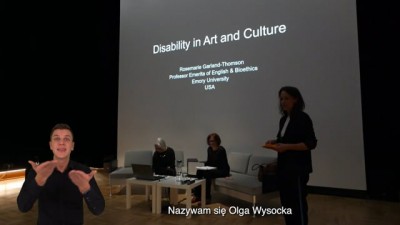
Lecture by Rosemarie Garland-Thomson in English translated into Polish

Zachęta / cinema room (entrance through the cloakroom )
free entry

Disability is not a marginal and private matter or a medical issue to be treated or cured—it is a political, social, and cultural category, ubiquitous in our society. Extraordinary bodies are present in all spheres of our lives and their representation in art, literature, and culture constitutes the core and frame through which we get to familiarize ourselves with physical difference. Throughout the years, many cultural images of disability have actively participated in the production and stigmatization of the “other,” explaining and justifying our urge to stare. The act of staring is both our instinctive urge to react to novelty and difference and something which is socially forbidden. We stare at extraordinary bodies and we stare at photographs, pictures, and paintings—the representations of what is new, unknown, unfamiliar and what arouses our interest. In such encounters, disability frequently appears to be one of the many forms of human embodiment that has the potential to catch the eye of the beholder. The analysis of the underlying mechanisms of staring allows us to understand and accept our natural tendency to look intensively at what is different and to appreciate human diversity.


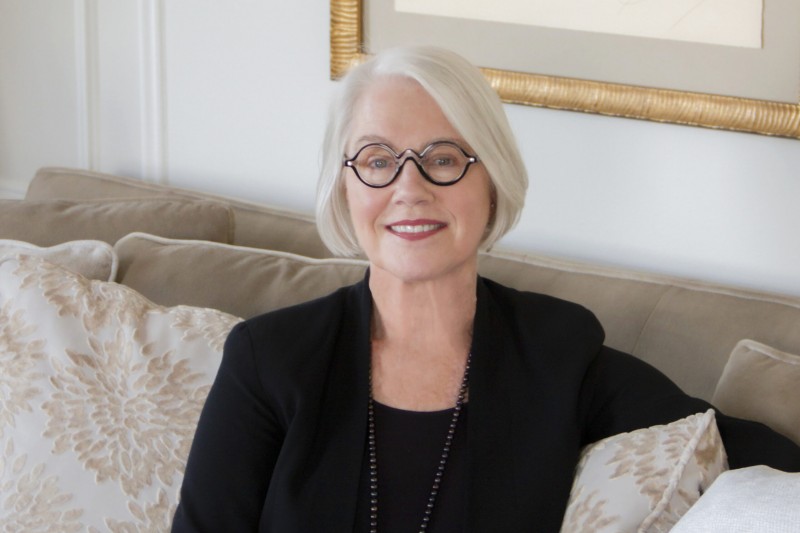
Rosemarie Garland-Thomson, PhD, is professor emerita of English and bioethics at Emory University and a visiting professor of healthcare ethics at UCLA. RGT is a senior advisor and fellow at the Hastings Center, where she is also chief project advisor for “The Art of Flourishing: Conversations on Disability and Technology,” a project supported by the National Endowment for the Humanities. She is also a 2020 National Endowment for the Humanities Public Scholar and a Phi Beta Kappa Visiting Scholar for 2021–22.

co-organizer: Institute of English Studies, Faculty of Modern Languages, University of Warsaw
See also
  • Grafika obiektu: Disability in art and culture
    mediateka / films
    Disability in art and culture
    Rosemarie Garland-Thomson lecture translated into PJM
Upcoming events
all
  • 05.02 – 06.02.2026
    Global and forgotten connections: the circulation of visual arts between socialist European countries and Asia, Latin America and Africa during the Cold War
    Zachęta | cinema room (entrance from Burschego Street, up the stairs)cinema room
  • 07.02 (Sat) 12:15
    Curator's tour of the exhibition
    What Are Our Collective Dreams? | Finissage weekend
    Zachęta – National Gallery of ArtZachęta
  • 07.02 (Sat) 14:00
    What kind of future do we want? What do we dream about?
    What Are Our Collective Dreams? | Finissage weekend
    Zachęta | in the exhibition spaceZachęta | in the exhibition space
  • 07.02 (Sat) 16:30
    Co-thinking: speculative workshop
    What Are Our Collective Dreams? | Finissage weekend
    Zachęta | in the exhibition spaceZachęta | in the exhibition space
  • Cooking with Mama x GALAS
    What Are Our Collective Dreams? | Finissage weekend
    Zachęta | in the exhibition spaceZachęta | in the exhibition space
  • 08.02 (Sun) 10:45
    Yoga at Zachęta
    Zachęta | Mały SalonZachęta | Mały Salon
  • 08.02 (Sun) 12:15
    Sunday guided tour
    (in Polish)
    Zachęta – National Gallery of ArtZachęta
  • 08.02 (Sun) 14:00
    Selection of films from Latin America
    Filmoteka Narodowa — Instytut AudiowizualnyFINA
  • 10.02 (Tue) 17:30
    Philosophy at Zachęta
    (in Polish)
    Zachęta – National Gallery of ArtZachęta
  • 11.02 (Wed) 18:00
    Se(a)ns sztuki
    (in Polish)
    Zachęta | entrance from ul. Burschego (down the stairs)Zachęta | entrance from ul. Burschego (down the stairs)
  • 12.02 (Thu) 12:15
    Thursday guided tours of current exhibitions
    (in Polish)
    Zachęta – National Gallery of ArtZachęta
  • 14.02 (Sat) 12:30
    Movement classes for families with children
    (in Polish)
    Zachęta – National Gallery of ArtZachęta