
Cooking with Mama x GALAS
What Are Our Collective Dreams? | Finissage weekend
Zachęta | in the exhibition space
PLN 30, the ticket entitles the holder to enter all exhibitions on a given day
> BUY TICKET FOR Cooking with Mama
13:00 – 15:00
Workshop room
> BUY TICKET FOR GALAS | Cooking together with Fernando
15:30 – 17:30
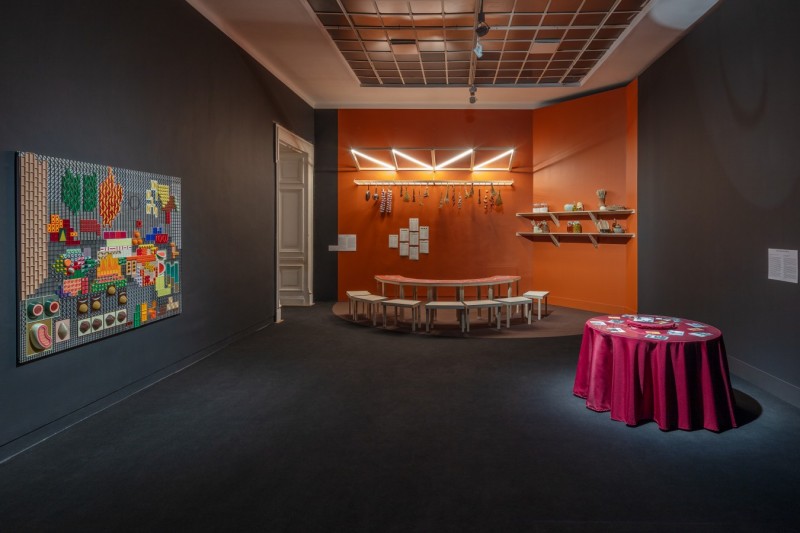
Room number 5, installation “Let’s us cook” by Vladyslav Gryn
Cooking with Mama
Textile zine presentation, Reading, Rituals, Solidarity auction
Mariia Vorotilina, Tanja Sokolnykova, Seseg Jigjitova, Oksana Potapova
Cooking with Mama is a series of community gatherings in Berlin and beyond, centering personal and collective hi/stories often underrepresented, overlooked, or erased. Through food rituals, storytelling and cooking practices from Eastern Europe, the Caucasus, and Northern and Central Asia, the gatherings explore questions on memory, transgenerational and local knowledge, decoloniality, and resistance,
nurturing a space of mutual care and solidarity.
Initiated by Maryna Markova (@koku_netzwerk), Tanja Sokolnykova (@politicalkitchenberlin), and Mariia Vorotilina, the gatherings stand as a homage to the long-standing initiative Cooking with Mama by the artist Hiwa K.
We invite you into this experiential space together with Buryat architect, artist, and decolonial activist Seseg Jigjitova, and Ukrainian activist-researcher of feminist care and decolonial imaginaries of peace Oksana Potapova. Together, we will weave personal stories into collective reflection on transnational solidarities and on how these can be grounded in mutual understanding of shared responsibility, self-positionality, and the recognition of distinct yet interconnected anti-imperial and decolonial struggles.
Embodied care practices, such as rituals, will invite presence, imagination, and attentive listening into the space. We will present, read, and raffle one of our solidarity textile zines, a handmade artistic publication that archives and celebrates the communal gatherings held in Berlin through visual and written contributions.
Galas | Cooking together with Fernando
10,000 years ago – in the lowlands of Southwest Mexico – Indigenous Mexicans domesticated Maize (Corn/Kukurydza) out of the wild grass Teosinte. This development provided the agricultural and spiritual infrastructure for Mesoamerican civilizations to be rooted and grow. Maize became the nutrient-dense whole grain which still conserves our culture to this day. Mesoamerican civilizations believed humanity was created from maize, and it remains a sacred life-sustaining entity. This preserved spirituality for the food we eat is an active methodology for decolonization. The Indigenous people of Mexico have been able to continuously conserve and cultivate over 60 types of traditional maize for millennia.
“Sin maiz, no hay pais,” Without corn, there is no nation (people).
Today we will be learning how to make the staple comfort snack – Esquites – coming from the Nahuatl word ízquitl, meaning “toasted corn.” This has always been an on-the-go communal snack/offering, and today’s street vendors ensure to keep this tradition alive within Mexico's current metropolis. Now, we will keep this tradition alive today, here in Warsaw.
Todos, Humanos de Maize.
We will cook together with Fernando …
Fernando Morales de la Peña is a first-generation Mexican-American, socially engaged contemporary artist, advocate, and researcher. Their multidisciplinary practice centers on amplifying humanity’s often obscured narratives and fostering critical dialogue around communal grievance and joy. Rooted in folk traditions and shaped by contemporary perspectives, their work interrogates the decolonization of the mind within a global, intersectional framework. Formerly based in Mexico City, California, and Osaka, Fernando relocated to Poland through Dom Twórczy Kadenówka, founded by Paulina Ołowska, and is now based in Warszawa, working internationally.
-
 17.10.2025 – 08.02.2026What Are Our Collective Dreams?Global Connections — Abandoned Friendships
The exhibition opens the archives of Zachęta to revisit the networks of global artistic relations forged during the socialist era in Poland. Contemporary artists confront these histories with the present, asking what remains of the “internationalist friendships” from before 1989, and how they might shape our understanding of a shared past.
Zachęta – National Gallery of ArtZachęta